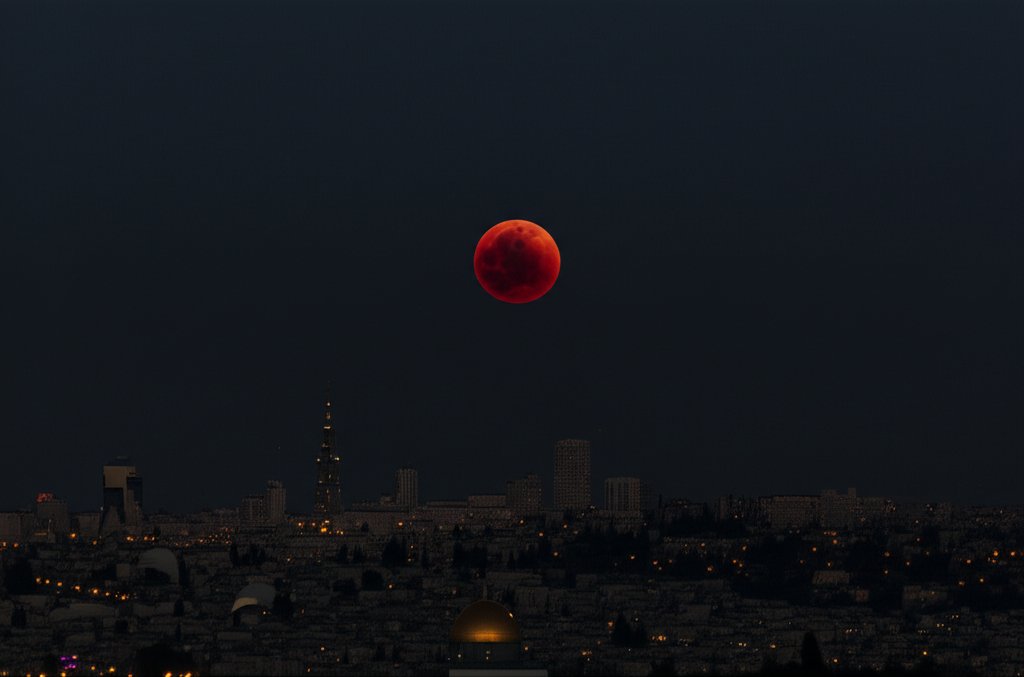
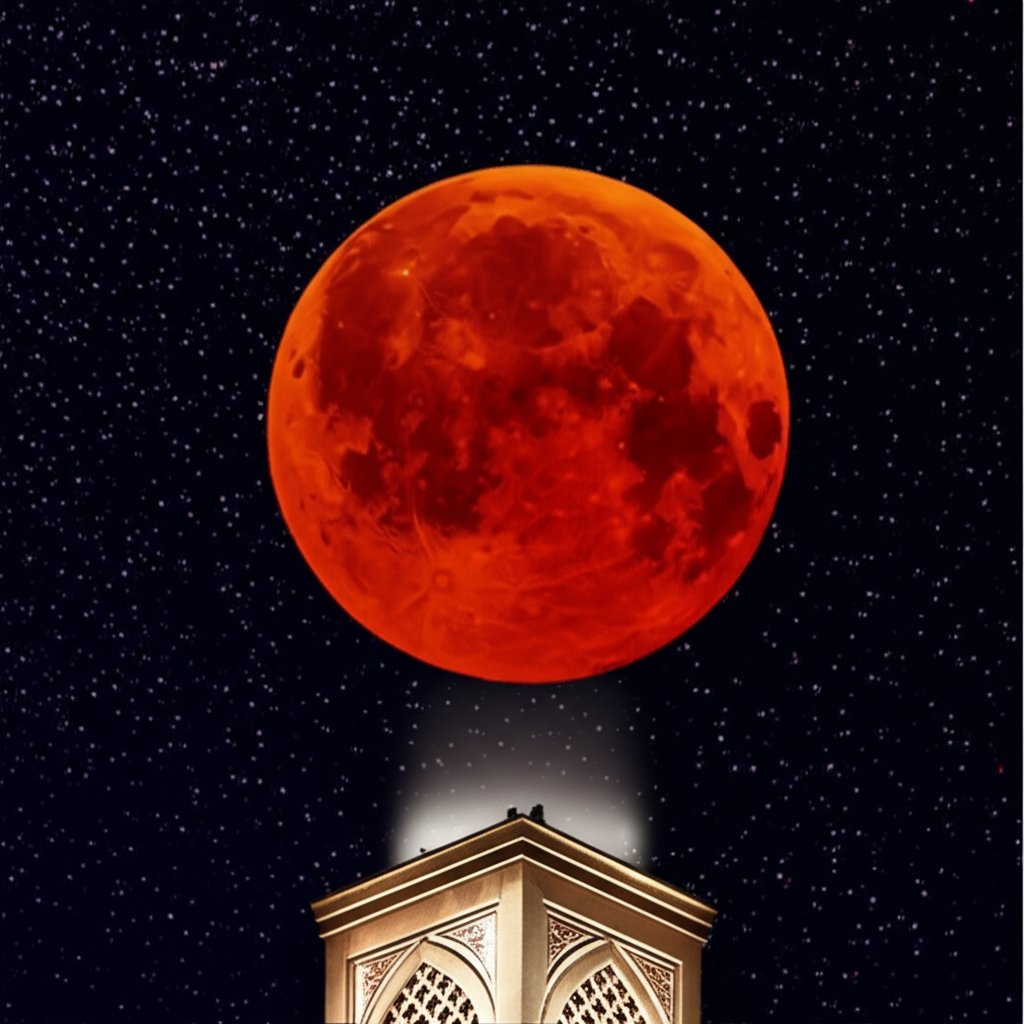
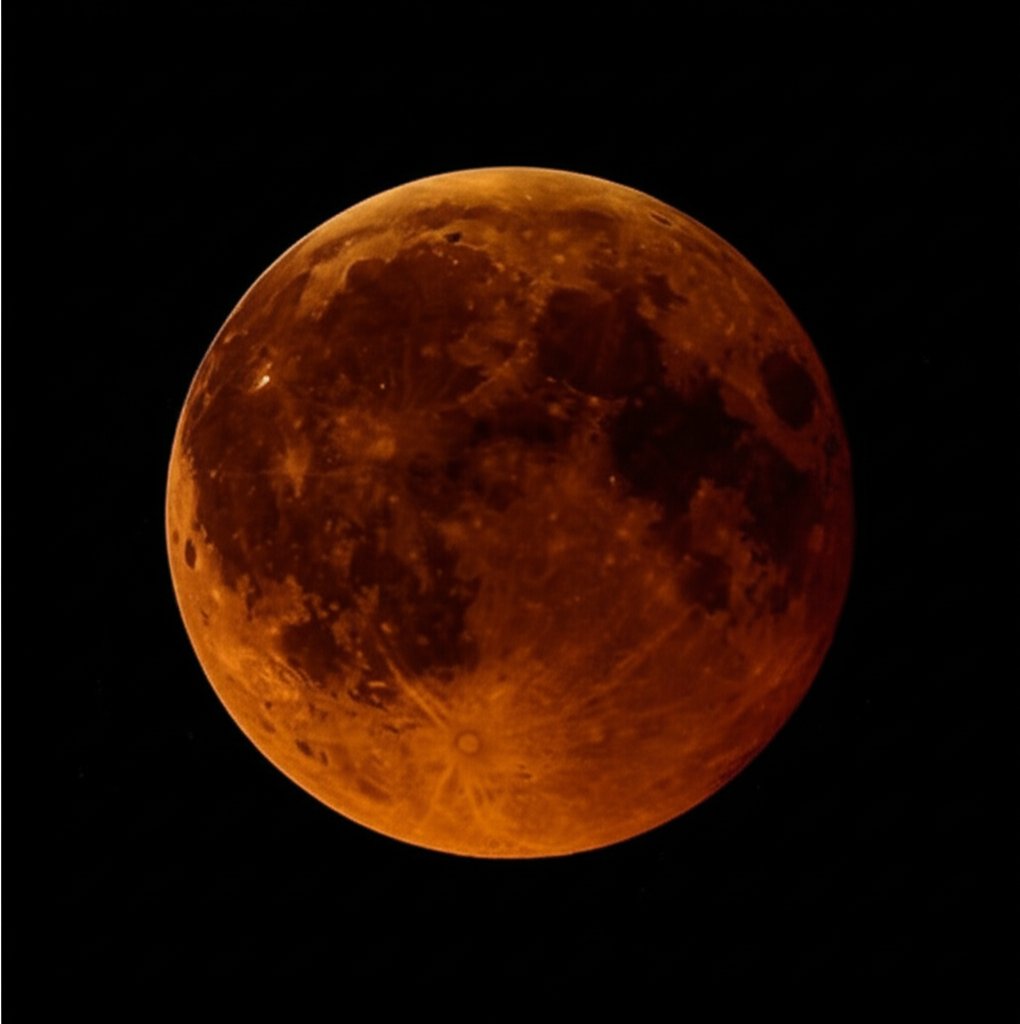
A breathtaking total lunar eclipse, colloquially known as the 'blood moon' due to its dramatic reddish tint, captivated millions across the Middle East and much of Asia on Sunday, September 7, 2025. The celestial event offered a rare and spectacular display as the Earth's shadow fully enveloped the moon, painting it in shades of deep orange and crimson. This highly anticipated astronomical phenomenon drew stargazers, amateur astronomers, and the general public outdoors to witness a sight that will not recur in its totality until 2028.
The Celestial Phenomenon Unfolds
The eclipse began its visible phase in Israel at approximately 7:27 P.M. local time, when the Earth's penumbral shadow first began to graze the lunar surface. As reported by Haaretz, the eclipse reached its peak at 9:12 P.M., presenting the full 'blood moon' effect to observers. This prime viewing window allowed for optimal visibility across a vast geographical area, extending from the Levant eastward across numerous Asian countries.
During a total lunar eclipse, the Earth passes directly between the sun and the moon, casting a shadow that gradually obscures the lunar disk. Unlike a solar eclipse, which requires specialized viewing equipment, a lunar eclipse is safe to observe with the naked eye, binoculars, or telescopes, making it a highly accessible astronomical event for a global audience. The extended duration of the total phase provided ample opportunity for photography and prolonged observation.
Understanding the 'Blood Moon' Hue
The distinctive reddish-orange color that gives the 'blood moon' its evocative name is a result of a phenomenon known as Rayleigh scattering. During a total lunar eclipse, sunlight entering Earth's atmosphere is scattered. Blue light, with its shorter wavelengths, is scattered more effectively by atmospheric particles, which is why our sky appears blue. Red and orange light, with longer wavelengths, passes through the atmosphere more directly, bending around the Earth and illuminating the moon. Essentially, the moon is lit by all the sunrises and sunsets happening around the globe at that moment. The intensity and exact hue of the 'blood moon' can vary depending on factors such as dust, clouds, and volcanic ash in Earth's atmosphere.
Widespread Admiration and Public Engagement
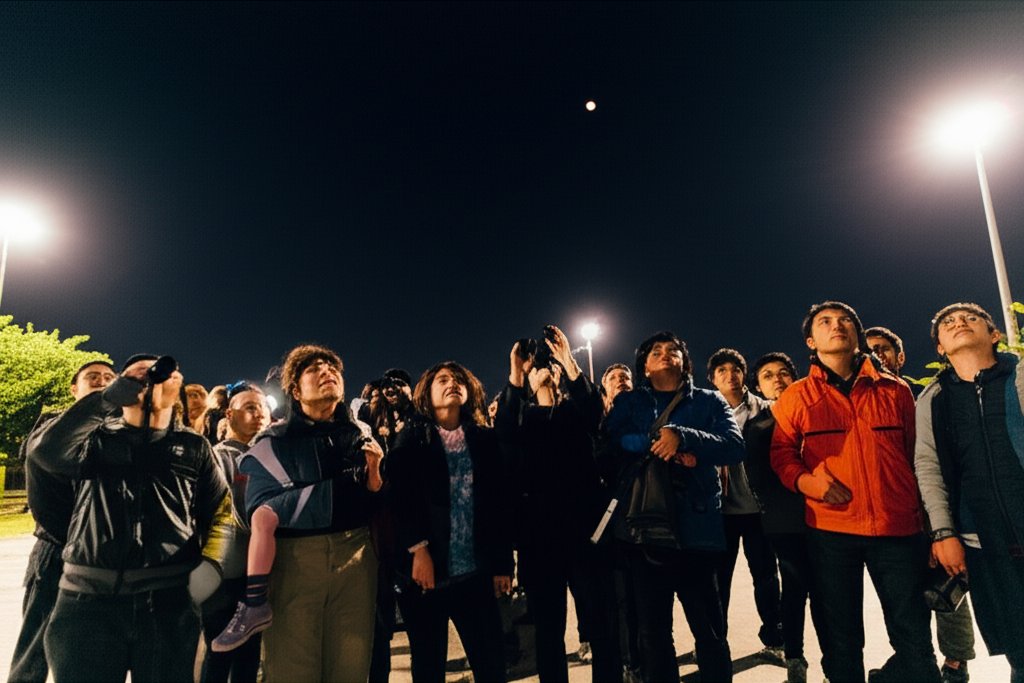
From bustling city centers to remote desert landscapes, observers enthusiastically gathered to witness the rare spectacle. Public viewing events were organized in various locations, with astronomy clubs and scientific institutions setting up telescopes and offering guided explanations. Social media platforms were abuzz with real-time photographs and shared experiences, highlighting the shared human wonder inspired by cosmic events. Families, students, and seasoned astronomers alike expressed awe at the moon's transformation, turning a routine Sunday evening into a memorable astronomical event. The clear skies over much of the region contributed significantly to the excellent viewing conditions, enhancing the experience for countless individuals.
Astronomical Significance and Future Prospects
While primarily a visual spectacle for the public, total lunar eclipses also offer valuable opportunities for scientific study. Astronomers can use these events to study the Earth's atmosphere, as the light filtering through it to reach the moon provides insights into its composition and density. They also offer a chance to engage the public in astronomy and science education, fostering a greater appreciation for the universe.
This past Sunday's event was particularly significant given its rarity. The next total lunar eclipse of this magnitude will not occur until 2028, making this recent viewing a truly special occasion for those who witnessed it. Partial lunar eclipses are more frequent, but the full dramatic effect of the 'blood moon' remains a relatively uncommon sight.
The successful observation of the total lunar eclipse across the Middle East and Asia underscores the enduring fascination humanity holds for the cosmos. As the moon slowly returned to its full brilliance following its crimson interlude, it left behind a profound sense of wonder and a reminder of the intricate dance of celestial bodies that unfolds above us.