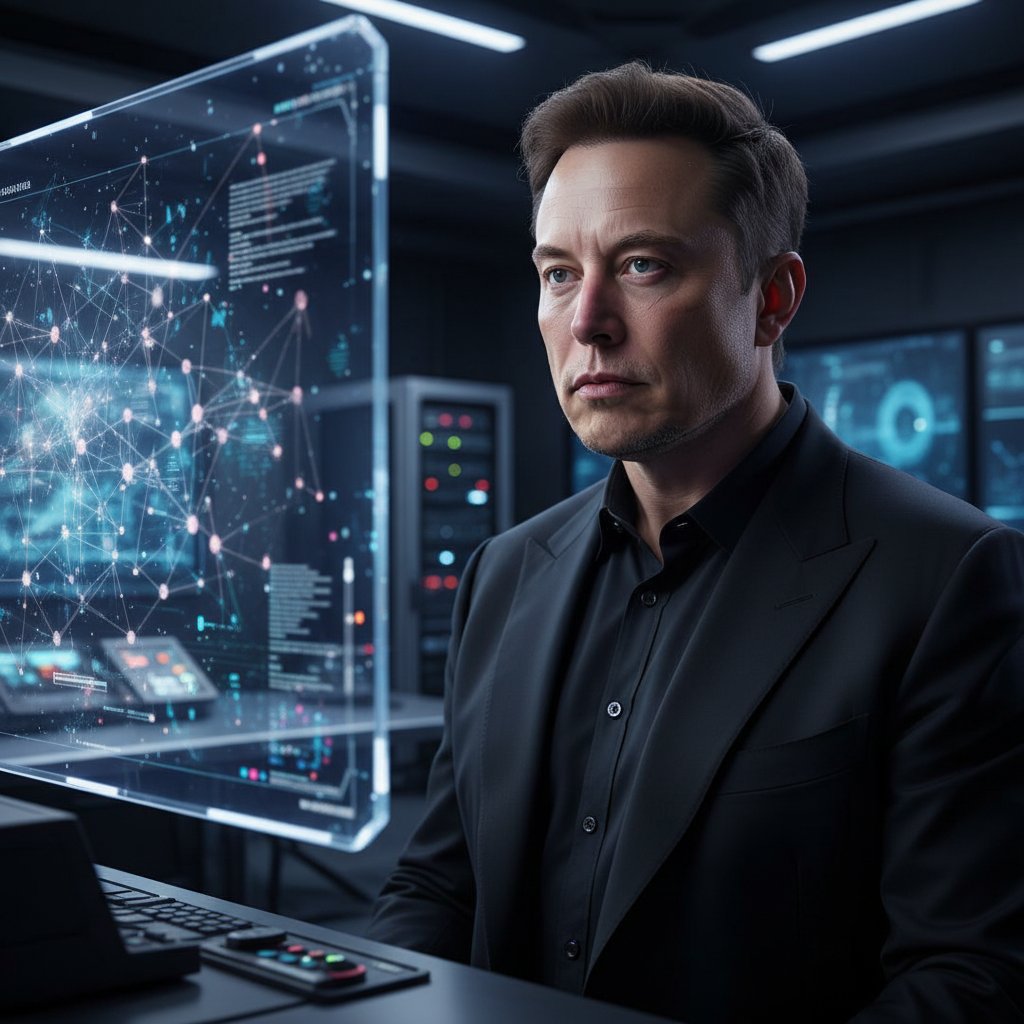
In a series of pointed statements issued this week, billionaire Elon Musk has intensified his campaign against the leading architects of generative artificial intelligence. Musk, the founder of xAI, characterized his competitors—specifically OpenAI, Google, and Anthropic—as being ideologically compromised, labeling their flagship models as “woke,” “weak sauce,” and “sanctimonious” on sensitive cultural and political issues.
The provocations, which culminated in a series of posts on the social media platform X, coincide with the wider rollout of Grok’s latest capabilities. Musk’s central argument posits that current industry leaders have programmed their AI systems to prioritize political correctness over objective truth, a move he claims poses a fundamental risk to the future of human civilization.

The Ideological Divide in Silicon Valley
At the heart of Musk’s grievance is the perceived bias in how AI models handle controversial queries. During a recent presentation for xAI investors, Musk cited examples where rival chatbots allegedly refused to answer certain questions or provided responses that he deemed skewed by a “progressive” worldview.
“The danger of training AI to be ‘woke’—in other words, to lie—is immense,” Musk stated. He argued that systems like Google’s Gemini and OpenAI’s ChatGPT have been constrained by excessive guardrails that prevent them from addressing reality. By contrast, Musk presents Grok as a “truth-seeking” AI designed to answer questions with a degree of wit and a rebellious streak, purposely avoiding what he calls the “forced diversity” of competitor outputs.
The Competitive Landscape of 2026
The AI sector has reached a fever pitch in early 2026, with the market bifurcating into two distinct camps: those prioritizing safety and alignment, and those advocating for radical transparency. OpenAI and Anthropic have consistently defended their approaches, noting that guardrails are essential to prevent the generation of hate speech, biological weapon instructions, and deepfake misinformation.
Industry analysts suggest that Musk’s “anti-woke” branding is as much a marketing strategy as it is a philosophical stance. By positioning Grok as the only alternative to a perceived tech monoculture, xAI is carving out a significant niche among users who feel alienated by mainstream tech platforms.
| Feature | Mainstream Models (ChatGPT/Gemini) | xAI Grok |
|---|---|---|
| Primary Focus | Safety, Harm Reduction, Utility | Transparency, Humor, Real-time Data |
| Data Sourcing | Web Scrapes, Licensed Media, RLHF | X (Twitter) Real-time Feed, Public Web |
| Ethical Guardrails | High (Refuses controversial content) | Moderate (Designed to be "edgy") |

The Risk of Fragmentation
Experts in AI ethics express concern that the politicization of these tools could lead to “informational silos.” If users choose an AI model based on its political alignment, the technology could exacerbate existing societal divisions rather than providing a shared foundation of facts.
“When we start treating large language models as political proxies, we lose the primary benefit of the technology,” says Dr. Aris Thorne, a senior researcher at the Institute for Digital Ethics. “The goal should be accuracy and reliability, not whether the AI agrees with a specific cultural faction. If Grok and ChatGPT provide fundamentally different ‘truths’ about the same event, we are entering a very dangerous era of digital reality.”
Despite these concerns, the demand for xAI’s services is growing. Since its integration into the X Premium ecosystem, Grok has seen a steady rise in daily active users, particularly among those who prize the model's ability to pull from real-time social media data—a feature that rivals still struggle to match without the same direct access to a massive proprietary social stream.
What Lies Ahead for xAI
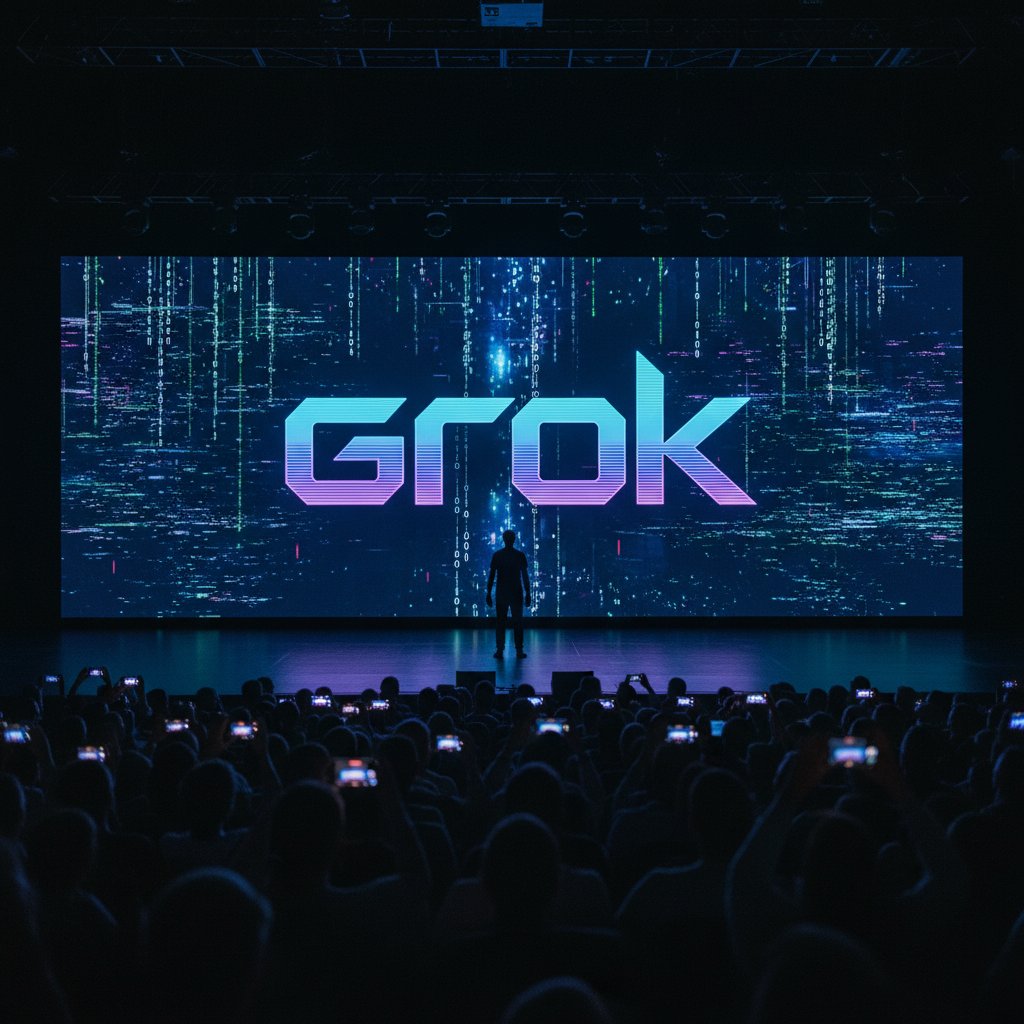
As 2026 progresses, xAI plans to expand Grok’s footprint beyond social media, eyeing integrations with Tesla’s fleet and future robotics projects. Musk’s insistence that “Grok must win” suggests a long-term commitment to capturing the cultural zeitgeist of the AI era.
While OpenAI continues to lead in raw computational power and corporate partnerships, the battle for the “soul” of AI is increasingly being fought on the grounds of cultural identity. For Elon Musk, the fight against “woke” AI is not just a business venture—it is a crusade to ensure that the silicon minds of the future reflect his vision of unfiltered human discourse.