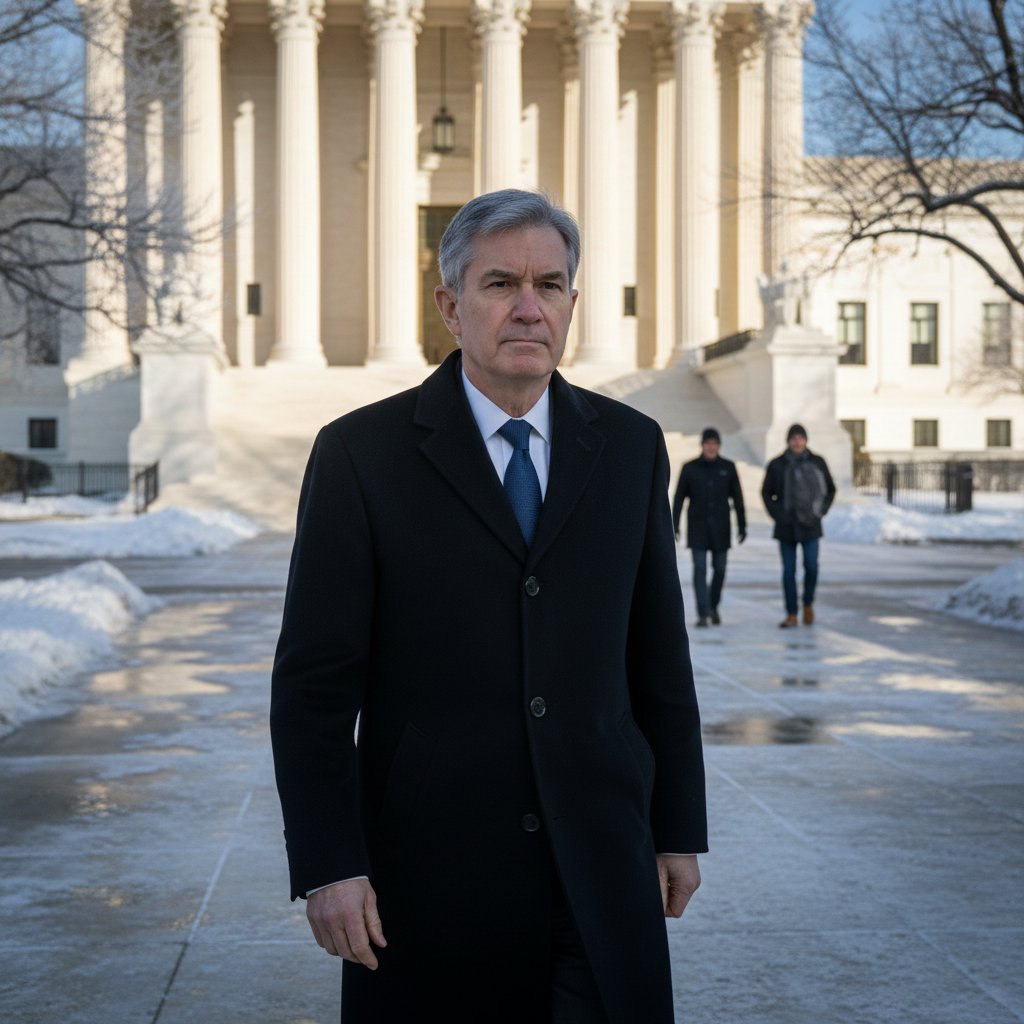
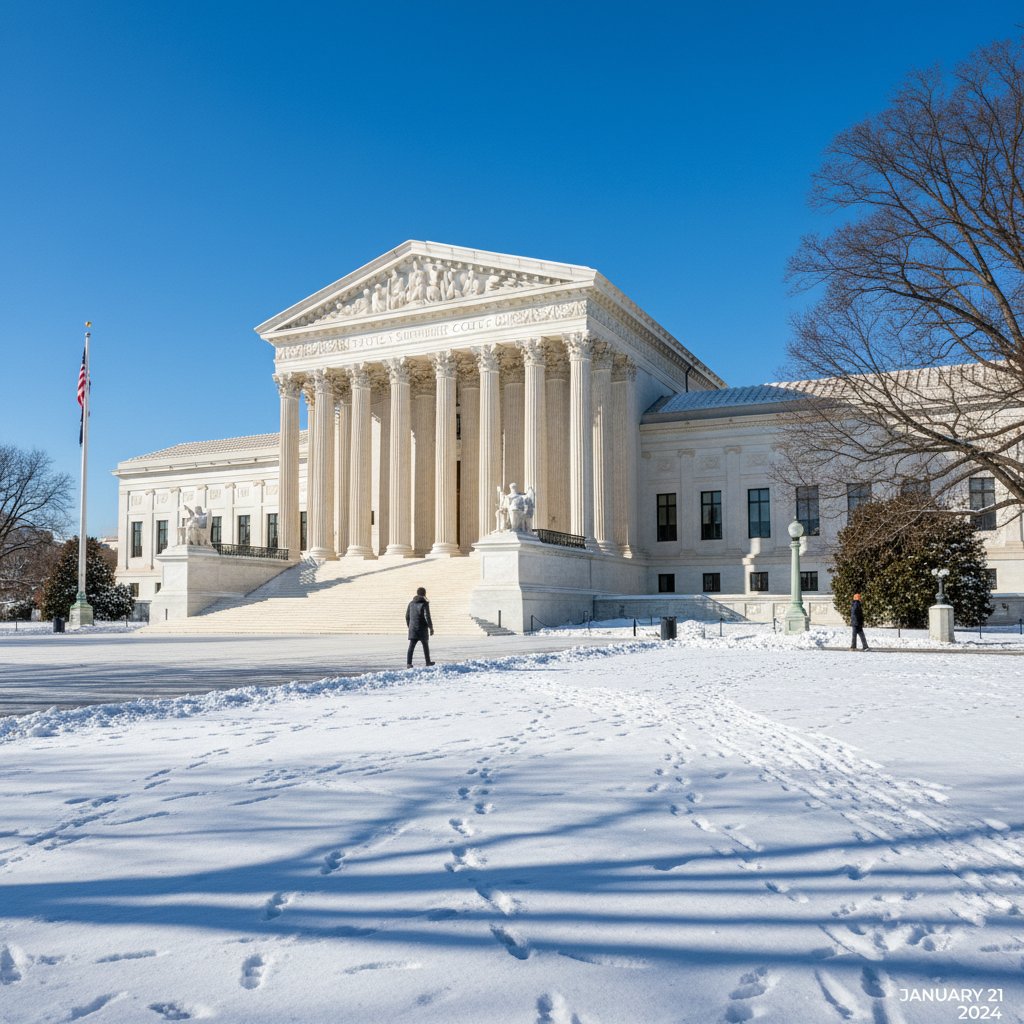
WASHINGTON — In a highly unusual move that underscores the gravity of the legal challenge facing the nation’s central bank, Federal Reserve Chair Jerome Powell arrived at the Supreme Court on Wednesday morning. He is attending oral arguments in a case that could fundamentally reshape the relationship between the White House and the Federal Reserve Board of Governors.
The case, which centers on an executive attempt to remove Governor Lisa Cook from her position, represents the most significant judicial review of the Federal Reserve’s independence in decades. Powell’s attendance is being viewed by legal scholars and market analysts as a silent but powerful statement of solidarity and a defense of the institution’s non-partisan mandate.
The Core of the Dispute
The legal battle began last year when the administration attempted to terminate Governor Lisa Cook’s tenure before the expiration of her term. The executive branch argued that the President should have the authority to remove members of the Board of Governors at will, rather than only "for cause"—a legal standard that currently protects Fed officials from political interference.
Governor Cook, the first Black woman to serve on the Board, has been a key figure in the Fed’s recent efforts to balance inflation control with maximum employment. Her legal team argues that the statutory "for cause" protection is essential to ensure that monetary policy remains insulated from short-term political pressures and electoral cycles.
The Supreme Court is now tasked with deciding whether the existing limitations on the President’s removal power are constitutional. This follows previous rulings, such as Seila Law LLC v. Consumer Financial Protection Bureau, where the court limited the independence of single-director agencies. The Federal Reserve, however, is a multi-member board, which historically has been granted higher levels of protection.
A High-Stakes Legal Precedent
Legal experts suggest that a ruling against Cook could strip the Federal Reserve of its ability to make unpopular but necessary economic decisions, such as raising interest rates, without fear of immediate executive retaliation.
"This is not just about one governor; it is about the architecture of the American economy," said Marcus Thorne, a constitutional law professor at Georgetown University. "If the court rules that Fed governors serve at the pleasure of the President, the wall between politics and the printing press is effectively demolished."
| Case Reference | Year | Subject | Court Ruling | | :--- | :--- | :--- | :--- | | Humphrey's Executor v. United States | 1935 | FTC Commissioner removal | Limited Presidential removal power for multi-member boards | | Seila Law LLC v. CFPB | 2020 | CFPB Director removal | Found single-director at-will protection unconstitutional | | Collins v. Yellen | 2021 | FHFA Director removal | Confirmed President can fire single agency heads at will |

Market Reactions and Economic Implications
Global markets have remained on edge as the arguments proceed. The independence of the Federal Reserve is considered a cornerstone of the U.S. dollar’s status as a global reserve currency. Analysts warn that any perception of political meddling in interest rate decisions could lead to increased volatility and a loss of investor confidence.
"The bond market relies on the predictability of the Fed," noted Sarah Jenkins, chief economist at a major New York investment firm. "If the Chair or the Governors are constantly looking over their shoulders to see if the White House approves of their data-driven decisions, the credibility of the inflation target disappears."
Jerome Powell has consistently maintained that the Fed’s strength lies in its ability to operate based on economic data rather than political expediency. His presence in the courtroom today, seated among the public gallery, reinforces that stance without the need for a formal statement.
The Path Ahead
The Supreme Court’s nine justices are expected to question both the Solicitor General and Governor Cook’s counsel on the specific nature of "quasi-legislative" and "quasi-judicial" functions of the Fed. The defense is likely to emphasize that the Fed’s unique role in managing the money supply requires a level of insulation from the executive branch that differs from standard cabinet positions.

A decision is not expected until the end of the term in June 2026. Until then, Governor Cook remains in her position, though the shadow of the litigation continues to loom over the Board’s deliberations.
The outcome will ultimately determine whether the Federal Reserve remains an independent arbiter of the American economy or becomes an extension of the executive branch’s policy wing. For Jerome Powell and his colleagues, the stakes could not be higher.