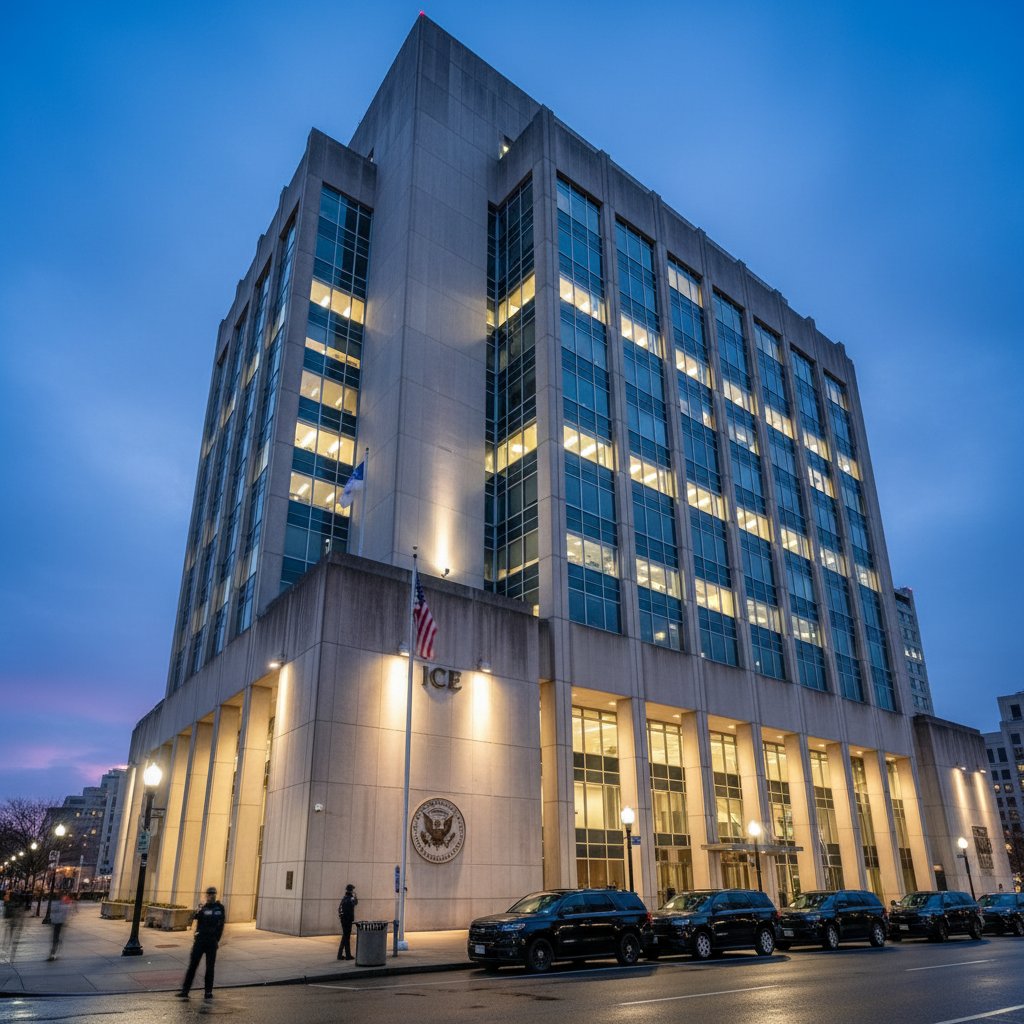
A newly revealed internal memorandum from U.S. Immigration and Customs Enforcement (ICE) has ignited a firestorm of legal and political controversy. The document, which was disclosed to U.S. senators by the legal group Whistleblower Aid, reportedly instructs agents and officers that they may enter a person’s home to effect an arrest without obtaining a judicial warrant.
The disclosure, first reported by The Washington Post, highlights a significant shift in operational policy that legal experts warn could infringe upon fundamental Fourth Amendment protections against unreasonable searches and seizures. The memo was allegedly signed by the ICE acting director in May, though its contents only reached public light this week through government whistleblowers.

Details of the Directive
The memorandum specifically addresses the protocol for "at-large" arrests—operations conducted in the community rather than in controlled environments like jails or courthouses. According to the documents provided by Whistleblower Aid, the guidance suggests that administrative warrants, which are signed by immigration officials rather than judges, provide sufficient authority for agents to enter private dwellings under specific circumstances.
In the United States legal system, a distinction is typically made between a judicial warrant, which is reviewed and signed by a neutral judge based on probable cause, and an administrative warrant. Historically, the Supreme Court has maintained that an administrative warrant does not grant the same authority to enter a private residence as a judicial criminal warrant.
Whistleblower Aid, representing two government employees, argued that the instructions provided to agents were not only legally dubious but also placed field officers in a precarious position. By following the memo, agents could potentially face personal liability for civil rights violations if the directive is eventually found to be unconstitutional.
Constitutional and Legal Implications
The Fourth Amendment of the U.S. Constitution protects the "right of the people to be secure in their persons, houses, papers, and effects." Legal scholars point to the "sanctity of the home" as a cornerstone of American jurisprudence.
"The home has always been afforded the highest level of protection," said Elena Rodriguez, a professor of constitutional law. "Allowing executive branch employees to authorize their own entry into private residences without oversight from the judiciary is a departure from decades of established legal precedent."

Advocacy groups and civil rights organizations have reacted with alarm. The American Civil Liberties Union (ACLU) issued a statement suggesting that the memo represents an "unprecedented expansion of executive power." Critics argue that such policies disproportionately affect immigrant communities and erode trust between local residents and federal law enforcement.
The Government’s Stance
While ICE has not issued an official public rebuttal to the specific leak, proponents of stricter immigration enforcement argue that agents require flexibility to apprehend high-priority targets who may be evading capture within private residences.
Enforcement advocates often point out that the complexity of modern immigration law requires administrative tools that allow for efficient operations. However, the memo's specific instruction to bypass the judicial warrant process for residential entry remains the primary point of contention.
Comparative Warrant Requirements
| Warrant Type | Signed By | Authorized Action | Judicial Review | | :--- | :--- | :--- | :--- | | Judicial Warrant | Judge/Magistrate | Entry into home, Search, Arrest | Pre-authorization required | | Administrative Warrant | ICE Official | Arrest of individual | No prior judicial review | | "Knock and Talk" | N/A | Requesting voluntary entry | N/A (Consent-based) |
Political Response and Oversight
The disclosure has prompted immediate calls for oversight hearings on Capitol Hill. Several senators have requested a formal briefing from the Department of Homeland Security (DHS) to clarify whether the memo remains active policy and how many entries have been conducted under these guidelines since May.
"We need to know who authorized this and why the traditional legal boundaries were ignored," stated Senator Marcus Thorne during a press briefing on Thursday. "Accountability in federal law enforcement is not optional."

Understanding Your Rights: An Explainer
For residents concerned about the implications of this policy, legal experts offer the following clarifications:
- Judicial vs. Administrative: A judicial warrant will always have the name of a court and the signature of a judge. An administrative warrant (Form I-200 or I-205) is signed by an immigration official.
- The Right to Deny Entry: Generally, unless an officer has a judicial warrant or there are "exigent circumstances" (like a life-threatening emergency), residents have the right to deny entry to their homes.
- Document Verification: Residents are encouraged to ask agents to slide any warrant under the door or hold it up to a window to verify the signature and the specific address listed.
As the legal battle over the memorandum unfolds, the focus remains on the balance between national security, immigration enforcement, and the constitutional rights of those living within the United States. The outcome of the Senate inquiry and potential court challenges will likely define the limits of federal authority in the years to come.