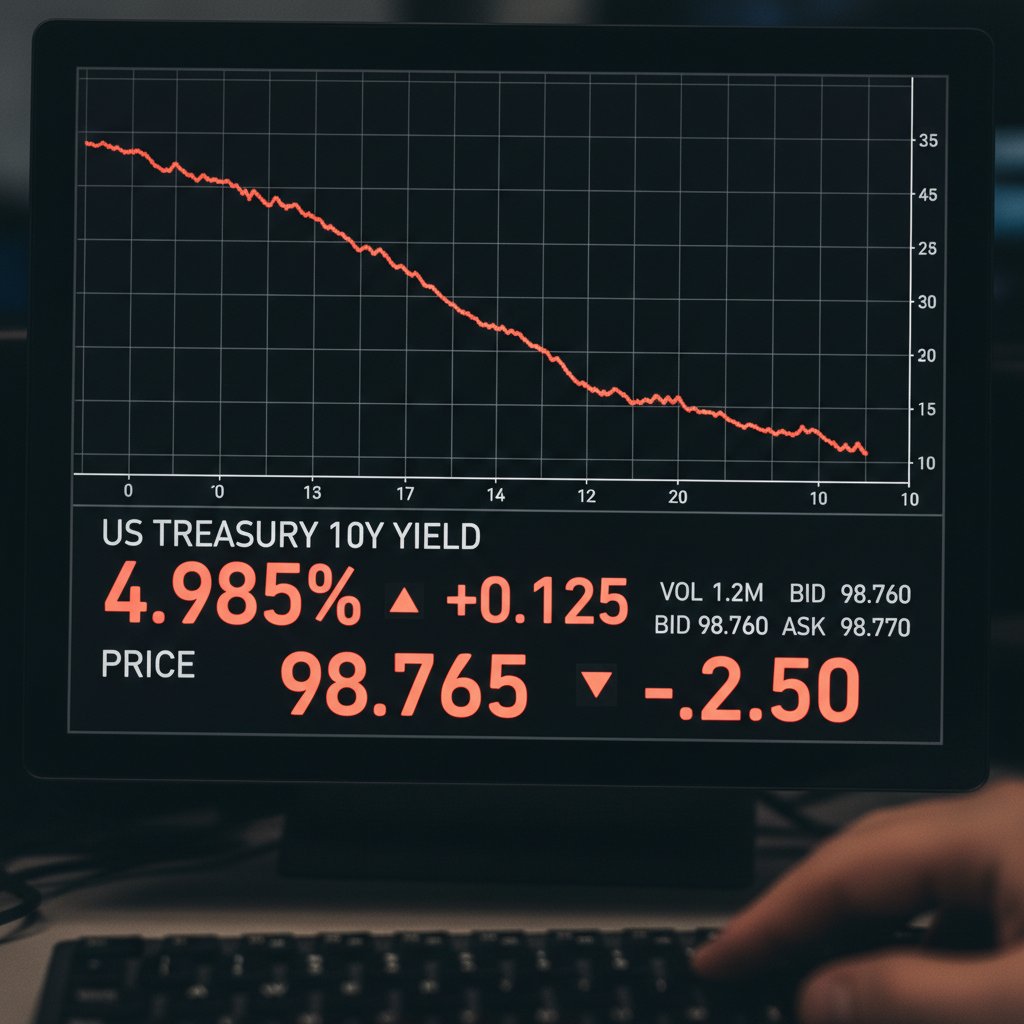
Bitcoin experienced a sharp correction on Tuesday, sliding below the critical $73,000 psychological threshold for the first time since late 2024. The world’s largest cryptocurrency by market capitalization fell more than 6% within a 24-hour window, touching a low of $72,884.38. This move marks a significant departure from the bullish sentiment that characterized the digital asset market throughout much of the previous year.
The sell-off was not isolated to the crypto sector. Broad-based retreats were observed across risk-on assets as a combination of escalating geopolitical friction and stubborn inflationary data in the United States prompted investors to seek the relative safety of the U.S. dollar and gold.
A Retreat from Risk
Market analysts point to a "perfect storm" of factors that triggered the liquidation. While Bitcoin has often been touted as "digital gold" or a hedge against traditional market instability, its recent price action suggests it remains tightly correlated with high-growth technology stocks and broader risk appetite.
"What we are seeing is a classic de-risking event," said Elena Rossi, a senior market strategist at Global Capital Insights. "When geopolitical tensions escalate to a certain point, the 'hedge' narrative for Bitcoin often breaks down in the short term as institutional players prioritize liquidity and cash over volatility."

The decline also follows a period of cooling interest in Spot Bitcoin Exchange-Traded Funds (ETFs). After a record-breaking influx of capital in 2025, net inflows have slowed significantly over the past three weeks. Data from major exchanges indicates that long-term holders, often referred to as "whales," have begun moving portions of their holdings to exchanges, a move typically interpreted as a precursor to selling.
Economic Headwinds and the Fed
Beyond the geopolitical landscape, investors are closely watching the Federal Reserve's next moves. Recent labor market data has remained unexpectedly resilient, leading to concerns that the central bank may delay anticipated interest rate cuts. Higher interest rates generally dampen the appeal of non-yielding assets like Bitcoin.
The following table illustrates the performance of major digital assets over the last 24-hour period:
| Asset | Price (USD) | 24h Change (%) | Market Cap |
|---|---|---|---|
| Bitcoin (BTC) | $72,912 | -6.2% | $1.43 Trillion |
| Ethereum (ETH) | $2,440 | -5.8% | $293 Billion |
| Solana (SOL) | $142 | -8.1% | $64 Billion |
Technical Support and Market Sentiment
From a technical perspective, the break below $73,000 is significant. This level had served as a strong support floor since the post-election rally in late 2024. Technical analysts are now looking toward the $70,000 and $68,500 levels as the next potential zones of support.
"The breach of $73,000 is psychologically damaging for retail investors who entered the market late last year," noted Marcus Thorne, head of digital asset research at FinTech Ledger. "If Bitcoin fails to reclaim this level within the next 48 hours, we could see further liquidations as stop-loss orders are triggered."

Despite the immediate bearish trend, some industry veterans remain optimistic. They argue that the current correction is a necessary "flush out" of over-leveraged positions. Historical data shows that Bitcoin frequently undergoes 10% to 20% corrections even during broader macro-uptrends.
The Broader Impact on the Crypto Ecosystem
The ripple effects of Bitcoin’s slide were felt across the entire cryptocurrency ecosystem. Ethereum, the second-largest digital asset, dropped nearly 6%, while smaller "altcoins" saw even steeper declines, with some losing as much as 12% of their value in a single afternoon.
The downturn also impacted publicly traded crypto companies. Shares of major exchanges and mining firms saw pre-market losses ranging from 4% to 9%. This interconnectedness highlights how Bitcoin remains the primary bellwether for the health of the broader blockchain industry.
As the trading week continues, market participants will be focused on the upcoming Consumer Price Index (CPI) release. Should inflation figures come in higher than expected, the pressure on Bitcoin and other risk assets is likely to intensify. Conversely, any signs of cooling inflation or a de-escalation in global conflicts could provide the catalyst needed for a price recovery.