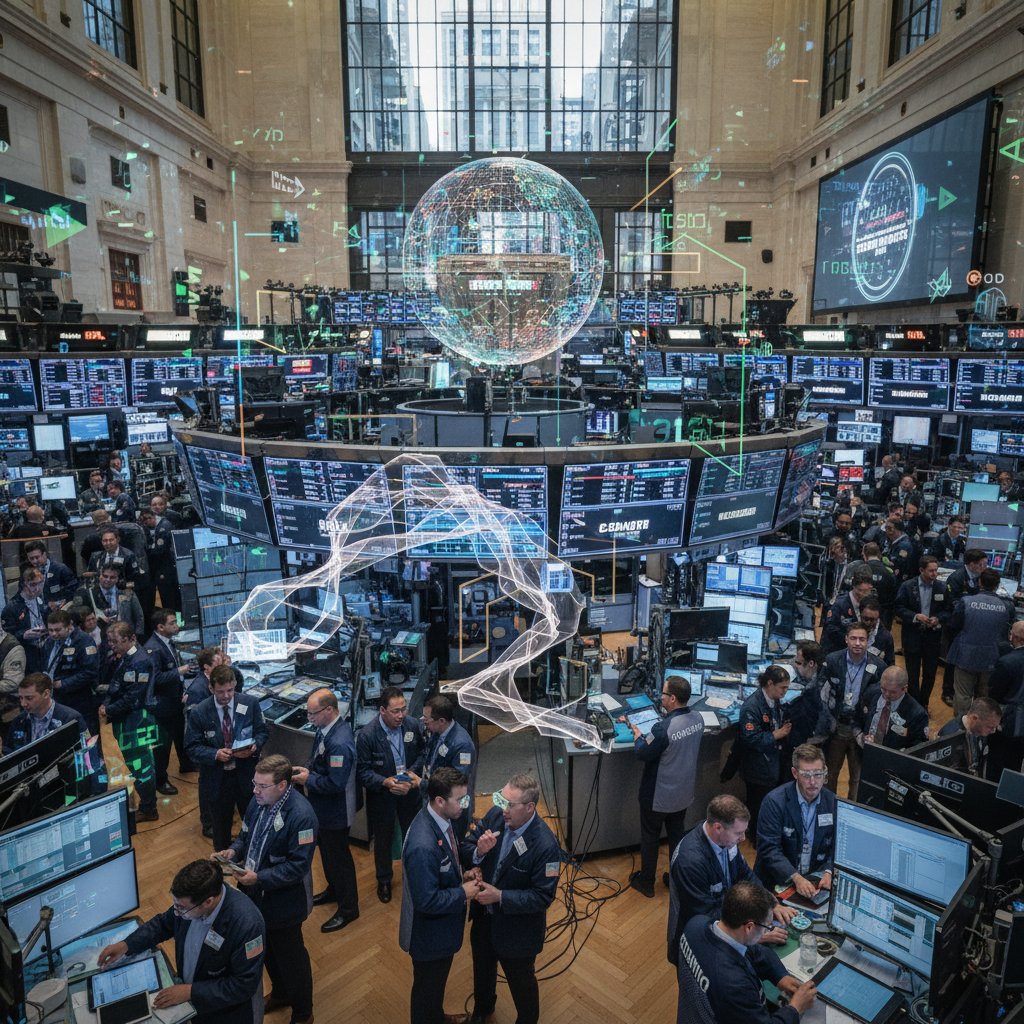
Market sentiment underwent a significant recalibration this week as several of the world’s most influential financial institutions issued updated guidance on the technology sector’s heavyweights. Following a flurry of analyst calls on Monday, investors are grappling with a "great divergence" between companies successfully monetizing artificial intelligence and those struggling with cooling consumer demand.
The updates from firms including Goldman Sachs, Morgan Stanley, and JPMorgan come at a critical juncture for the 2026 fiscal year. With interest rates stabilizing but global supply chains facing renewed geopolitical pressure, the latest reports emphasize that the "all-tide-lifting" era of tech growth has been replaced by a more surgical, stock-picking environment.
Nvidia Maintains Dominance Amid Blackwell Expansion
Nvidia remains the undisputed centerpiece of the current market cycle. Analysts at several major banks reiterated their 'Buy' ratings, citing the continued rollout of the Blackwell architecture and the early-stage development of the next-generation "Rubin" platform. The consensus among the analyst community is that demand for data center chips shows no signs of a "hard landing" in 2026.
Despite concerns regarding the sustainability of capital expenditure by "Hyperscalers" like Microsoft and Google, the latest calls suggest that the return on investment for AI-integrated cloud services is finally materializing. Analysts noted that Nvidia’s software ecosystem, specifically CUDA, continues to provide a moat that competitors have yet to breach effectively.
Apple Faces Scrutiny Over Hardware Cycles
In contrast to the optimism surrounding semiconductors, Apple received a more cautious series of notes. Several analysts pointed to a "plateauing" of the iPhone 17 cycle, suggesting that the initial rush for AI-enabled hardware has slowed. While Apple’s Services division continues to provide a high-margin cushion, the lack of a "must-have" hardware breakthrough in the early months of 2026 has led to a slight lowering of price targets by some cautious desks.
The focus for Apple is now shifting toward its rumored expansion into wearable robotics and more advanced spatial computing. However, for the immediate quarter, analysts are advising a "Wait and See" approach, focusing on whether the company can maintain its luxury-tier pricing in an increasingly competitive Chinese market.
Tesla and the Autonomy Premium
Tesla continues to be the most polarizing ticker on Wall Street. Monday’s analyst calls highlighted a stark divide: some see Tesla as an AI and robotics play, while others view it through the lens of a traditional automotive manufacturer facing margin compression.
Updated notes from Morgan Stanley suggested that Tesla’s FSD (Full Self-Driving) licensing deals could be a "sleeper hit" for 2026 revenue, potentially decoupling the stock price from quarterly vehicle delivery numbers. Conversely, analysts at JPMorgan remained focused on the rising competition from European and Chinese EV makers, which has forced Tesla to continue its aggressive pricing strategy at the expense of bottom-line profitability.

Mid-Cap Movers: Palantir, Zoom, and Roku
Beyond the "Magnificent Seven," several mid-cap tech stocks saw significant movement following analyst updates. Palantir received a notable upgrade based on the accelerating adoption of its Artificial Intelligence Platform (AIP) within the U.S. government and commercial sectors. Analysts described Palantir as a "pure-play" on sovereign AI, a theme that has gained traction as nations seek to localize their data processing capabilities.
Zoom and Roku, however, faced a more difficult start to the week. Analysts noted that while both companies have successfully transitioned from their pandemic-era peaks, they are struggling to find new growth engines. For Zoom, the challenge lies in competing with Microsoft Teams' deep integration into the enterprise stack. For Roku, the softening of the digital advertising market has led to a downgrade in near-term revenue expectations.
Macro Outlook and Investor Sentiment
The broader implication of these analyst calls is a shift toward quality and cash flow. Investors are no longer rewarded for holding "growth at any price." Instead, the market is favoring companies that can demonstrate a direct line from AI research to quarterly profit.
As we move deeper into January, these analyst calls will likely dictate the "pain trade" for the coming weeks. The high concentration of wealth in these few tech stocks means that even a minor shift in sentiment from a major bank can trigger billions of dollars in capital movement.
Frequently Asked Questions
Why do analyst calls move stock prices so significantly? Institutional investors often use these reports to rebalance large portfolios. A "Buy" or "Sell" recommendation from a top-tier bank can trigger automated trading algorithms and lead to high-volume price shifts.
What is a 'Price Target'? A price target is an analyst's projection of a stock's future price, typically over a 12-month period. It is based on earnings forecasts and historical valuation multiples.
Are these ratings always accurate? No. Analyst ratings are based on current data and projections. Unforeseen macroeconomic events, such as geopolitical conflicts or sudden changes in central bank policy, can render these predictions obsolete.