Equities markets faced a sharp correction on Wednesday as the S&P 500 shed 1%, marking a second consecutive day of losses and pulling the benchmark further away from its recent record-breaking peaks. The downturn was primarily driven by a combination of underwhelming earnings from major financial institutions, a sell-off in high-flying technology stocks, and an escalation in geopolitical anxieties that has prompted investors to reassess their risk exposure for the first quarter of 2026.
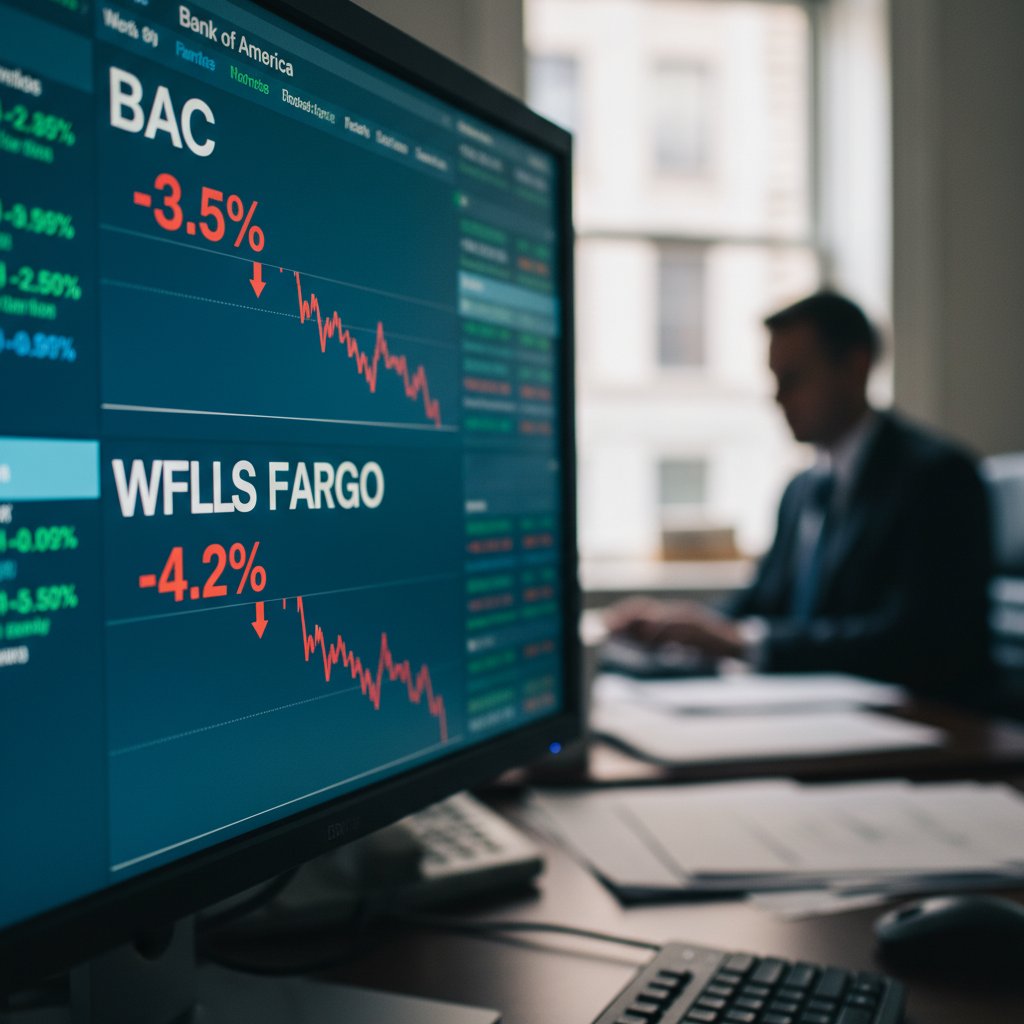
Traders entered the session with high expectations for the fourth-quarter earnings season, but the initial reports from the banking sector failed to provide the necessary momentum to sustain the rally. Both Bank of America and Wells Fargo saw their shares slide after reporting, highlighting the challenges facing the financial sector as interest rate environments shift and loan demand shows signs of cooling.
Banking Giants Face Headwinds
The financial sector, often viewed as a bellwether for the broader economy, came under intense scrutiny on Wednesday. Bank of America reported a narrowing of net interest margins, a key metric that tracks the difference between what a bank earns on loans and what it pays out on deposits. While the bank’s revenue remained relatively stable, the cautious guidance provided by executives regarding future credit losses spooked some institutional investors.
Wells Fargo followed a similar trajectory. Despite beating bottom-line estimates, the bank's stock dipped as analysts flagged concerns over its expense management and the slow pace of its regulatory recovery. The results suggest that while the "higher-for-longer" interest rate environment initially bolstered bank profits, the lingering effects of inflation on consumer spending are beginning to weigh on the quality of loan portfolios.
Market Indices Performance
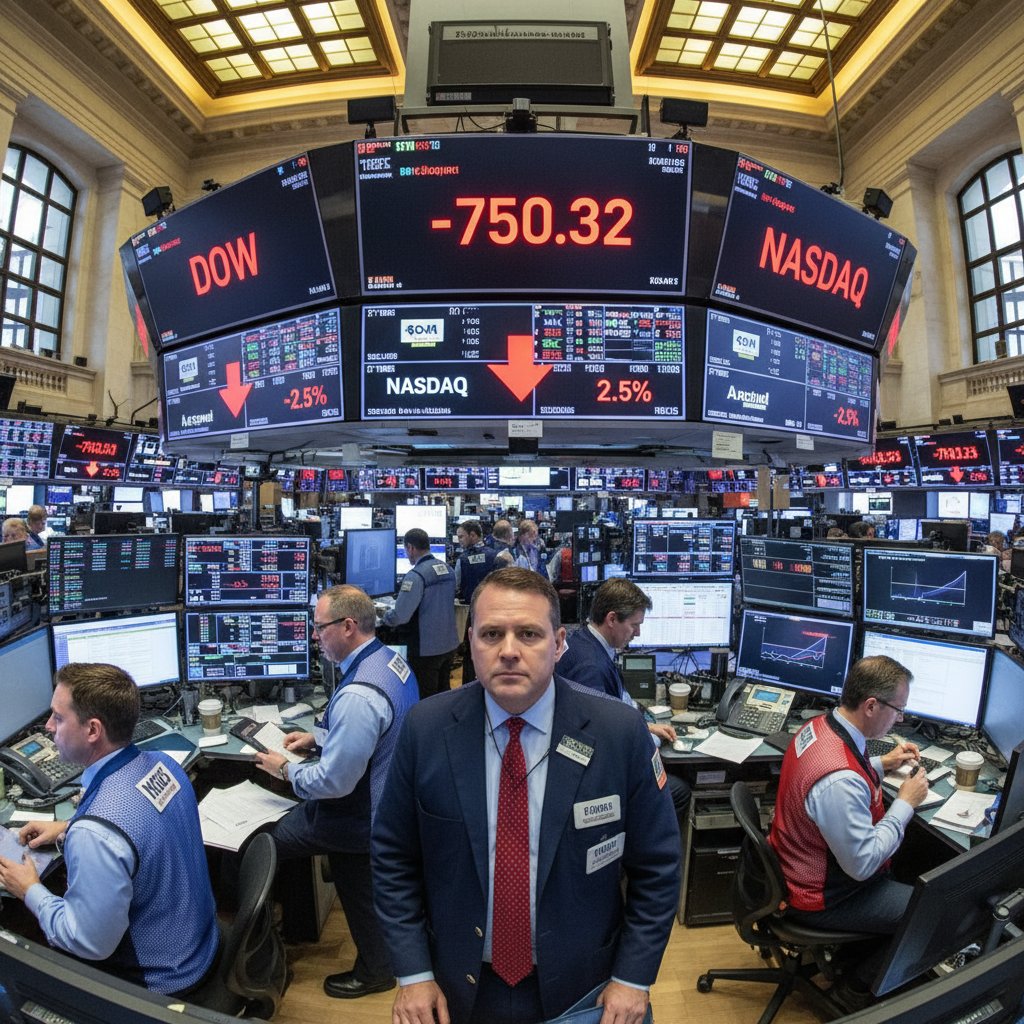
The following table provides a snapshot of the performance of major U.S. indices during the Wednesday session:
| Index | Closing Level | Change (%) | Points Change |
|---|---|---|---|
| S&P 500 | 5,822.40 | -1.02% | -59.81 |
| Dow Jones Industrial Avg | 43,782.15 | -0.74% | -326.20 |
| Nasdaq Composite | 18,912.30 | -1.45% | -278.45 |
Technology Sector Under Pressure
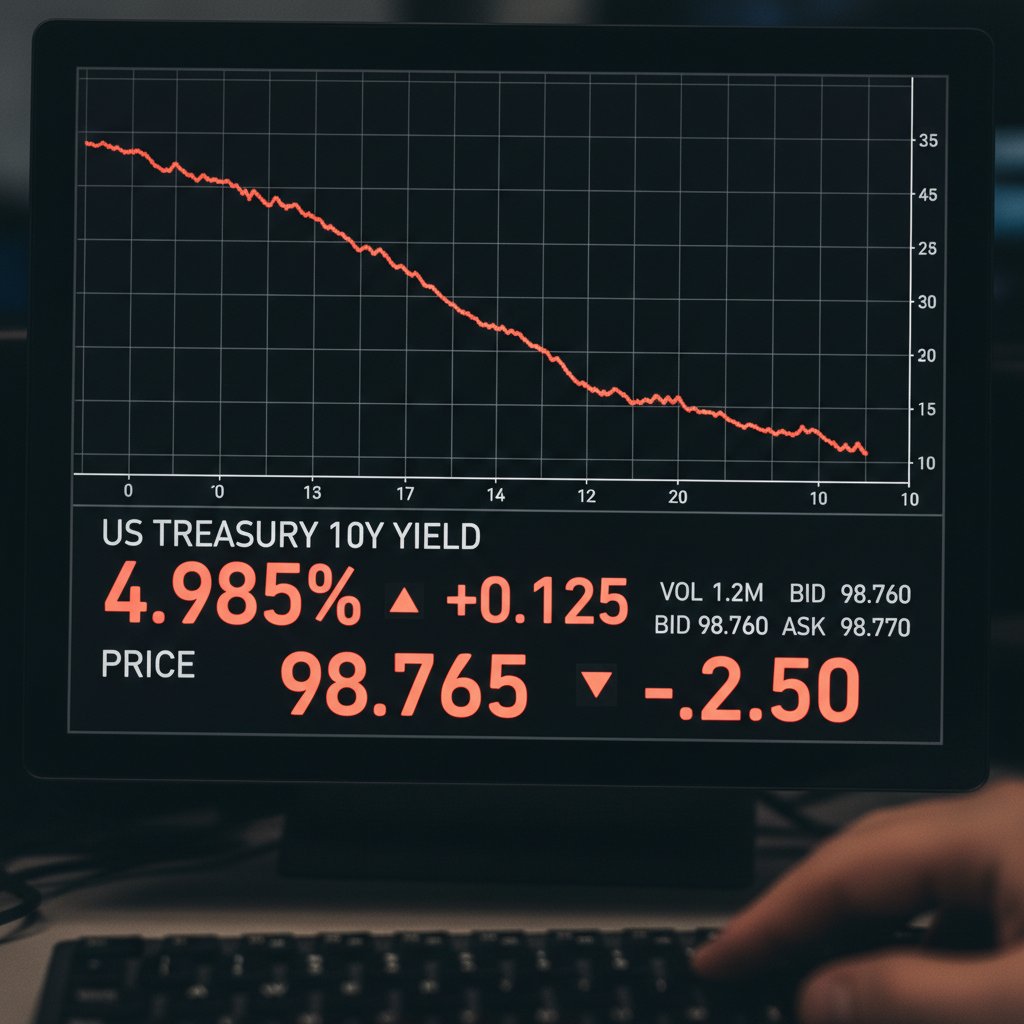
While the banking sector provided the initial catalyst for the decline, the technology-heavy Nasdaq Composite felt the deepest impact, sliding nearly 1.5%. Investors appeared to be taking profits in "Magnificent Seven" stocks, which have seen a meteoric rise over the past twelve months. The retreat in tech was exacerbated by rising yields in the Treasury market, which traditionally makes high-growth stocks less attractive due to higher discounting of future cash flows.
Artificial intelligence leaders, which have been the primary drivers of the 2025 bull market, saw significant volatility. Market analysts suggest that after the rapid expansion of valuation multiples, any sign of slowing enterprise spend on AI infrastructure could lead to a broader re-rating of the sector. The focus now shifts to upcoming reports from other big-tech players, which are expected to provide more clarity on the sustainability of the current AI-driven growth cycle.

Geopolitical Developments Weigh on Sentiment
Beyond the balance sheets, the geopolitical landscape played a significant role in Wednesday’s market mood. Tensions in the Middle East and ongoing trade discussions between the U.S. and major European partners have created a backdrop of uncertainty. Oil prices saw a slight uptick in response to these developments, adding to concerns about a potential resurgence in energy-driven inflation.
Investors are increasingly monitoring the situation for any signs of disruption to global supply chains. The Federal Reserve, which has been attempting to engineer a soft landing for the economy, may find its task complicated if external shocks force a shift in its current monetary policy path. For now, the consensus remains that the central bank will hold rates steady, but the "geopolitical premium" being baked into market prices is becoming harder for traders to ignore.

Investor Outlook and Strategy
As the earnings season continues, the focus will remain on corporate guidance and the health of the American consumer. Market strategists suggest that the current pullback may be a necessary "breather" for a market that had become arguably overextended. However, the sensitivity to earnings misses indicates that there is little room for error in the coming weeks.
For long-term investors, the volatility serves as a reminder of the importance of diversification. While the headlines focus on the daily swings of the S&P 500, the underlying health of the economy—characterized by low unemployment and steady, if moderate, GDP growth—remains a core pillar of support. Whether this week's slide is the start of a deeper correction or merely a temporary dip will depend largely on the data coming out of the next round of earnings reports.